A COLLECTION OF PERSONAL ARTICLES
SCRIPT to SCREEN to PRODUCTION - BABY DRIVER
‘Script to Screen’ class presentations are an opportunity for students to take on the role of ‘teacher.’ And it gives me a chance to learn from them, to keep me current. Students can choose a particular scene from any film - and BABY DRIVER did not disappoint. Lots of great insight into character, relationships, shot selection, pacing, colour palette, and production design.
L to R: Jon Bernthal, Eiza González, Ansel Elgort, and Jon Hamm have just robbed a bank.
‘Script to Screen’ class presentations are an opportunity for students to take on the role of ‘teacher.’ And it gives me a chance to learn from them, to keep me current. Students can choose a particular scene from any film - and BABY DRIVER did not disappoint. Lots of great insight into character, relationships, shot selection, pacing, colour palette, and production design.
BABY DRIVER is exciting. And the chase scenes are spectacular. True technical achievements in the action genre. I hadn’t seen the film for over a year, so revisiting the opening was a treat. Honestly, when it first came out I didn’t know what to expect from the title, but I found the film thoroughly enjoyable. The lead is played by Ansel Elgort, who creates a believable and totally unique character who is born to drive.
The director, Edgar Wright, kickstarts his show with the throttle wide open. He crafts a music-driven bank robbery with the obligatory getaway chase - and what a chase it is! Watch it here.
The scene runs a bit over five minutes and his script covers four pages. Fairly accurate, given the thumbnail guesstimate of one page of script timing out to be one minute of film. Here’s the script link.
Edgar Wright wastes no words nor space on the page. Likewise with his visuals. His rendering is impressive, yet he makes it look easy. So easy, in fact, that I took a poll of the class asking, “how many days of production did it take to get all the shots for this chase?”
While the class mulled over the question and watched the scene again, I texted the amazing Assistant Director, Walter Gasparovic, to confirm the ‘script to screen to production’ dynamics. Fortunately for me, he responded within minutes - and when I read his scheduling info, I knew it was going to shock the class into a new understanding of production mechanics.
Walter Gasparovic #truth
My students thought the scene probably took two to four days. That’s because good directors and production teams make it look SO EASY! So, we talked about location changes, helicopter shots, re-setting blocks of streets with background cars and extras. I could see the wheels turning as they re-considered. This wasn’t a production class, but it gave me a clearer idea of what is missing in post-secondary film education.
Here is Walter’s text. Let it be a lesson to film students and filmmakers everywhere:
Thank you, Walter! We’ll be looking for you on BABY DRIVER 2.
The Arabian New Wave
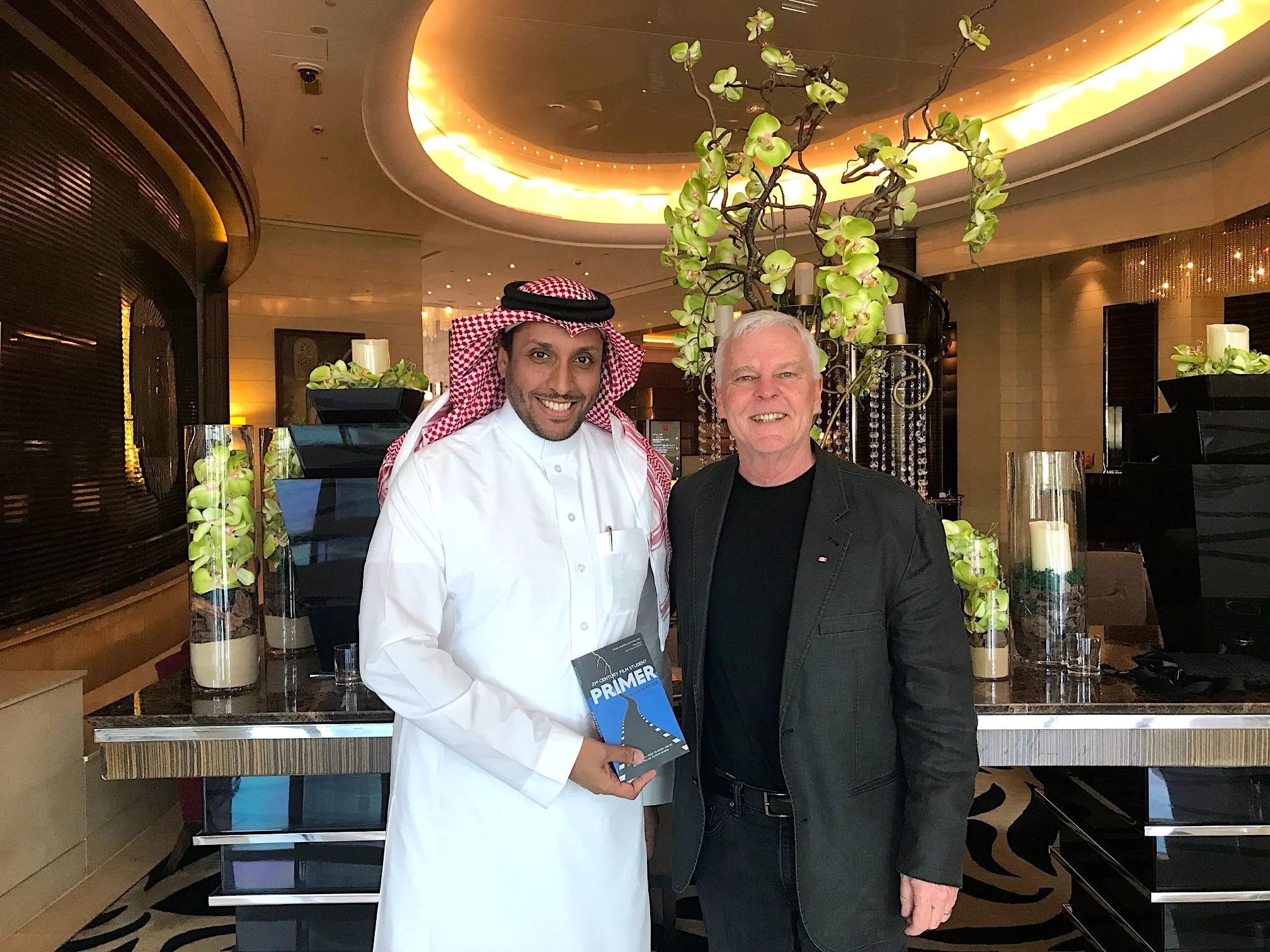
One of the greatest thrills for me as a teacher is to follow up with former students — and I love it when they’re making waves. Change-makers are busy, so I was grateful for the opportunity to sit down with Mohammed Obaidullah earlier this year to talk about cinema & film education in Saudi Arabia.
Mo studied with me at VFS and went on to work in the film industry in Canada. As a personal side project, he produced a popular online film education series in Arabic that garnered thousands of subscribers. He has since moved back to the capital city of Riyadh where he’s now the Director of Compliance and Control for Cinema and Audiovisual Media in the Kingdom of Saudi Arabia — and he’s playing a key role in the resurgence of their national cinema industry.
One of the greatest thrills for me as a teacher is to follow up with former students — and I love it when they’re making waves. Change-makers are busy, so I was grateful for the opportunity to sit down with Mohammed Obaidullah earlier this year to talk about cinema & film education in Saudi Arabia.
Mo studied with me at VFS and went on to work in the film industry in Canada. As a personal side project, he produced a popular online film education series in Arabic that garnered thousands of subscribers. He has since moved back to the capital city of Riyadh where he’s now the Director of Compliance and Control for Cinema and Audiovisual Media in the Kingdom of Saudi Arabia — and he’s playing a key role in the resurgence of their national cinema industry.
What’s happening in Saudi Arabia is more than a big deal in the world of film — it’s a cinematic movement. With a 35 billion dollar injection for the first phase of construction of hundreds of new theatres, Saudi Arabia is now poised to do what Hollywood has done so well — build an audience.
There have been pivotal times in the world of cinema that forever changed the global cultural fabric of film — and we are at the beginning of one these historic moments. The Saudi national cinema scene was small before it was stifled by authorities in the 1980’s. But now, with the recent lifting of the long-standing cinema ban, the new wave happening in the Arabian peninsula feels more like the first swells of a tsunami: a #SaudiCineTsunami.
Black Panther screening breaks Saudi’s 35-year cinema ban with men and women seated together - ABC News
The first part of the Saudi film plan is to build theatres, thousands of them, and then expand their creative industries with Saudi talent, new facilities, and schools. I’m hopeful that my new book will energize these young filmmakers who can now light up the screens in a country where cinemas have been dark for decades.
A March 2019 Variety article lays out some of the initiatives, including the first Saudi Arabia International Film Festival slated for 2020 and Vox Cinemas plan to open more than 100 screens this year. In keeping with the grandeur of the Kingdom, state-of-the-art multiplexes will offer gourmet dining amenities in feature locations, including Riyadh’s majestic Kingdom Center. Take a look at their impressive promo video.
Kingdom Center and Tower, Riyadh, Saudi Arabia — now with Imax theatres.
Mohammed Obaidullah at the ribbon cutting ceremony, Kingdom Center, Riyadh, Saudi Arabia
Developments in film education are also exciting. Like the women-only cinematic arts program which is pushing the boundaries for female filmmakers, bringing new eyes — and stories — to the screens of Saudi cinemas and beyond. It’s the first time that I’ve heard of an all-female film program, and I hope this ground-breaking idea catches on.
Leading film schools — such as La Femis and USC — have helped Saudi film talent with workshops and training courses, putting a focus on storytelling skills as well as technical disciplines. The door is now open for a new generation of 21st century filmmakers to make a difference. The world is watching!
Selfie with Mohammed Obaidullah
The comprehensive plan for the overall future of Saudi Arabia, known as Vision 2030, depends on the creative ambitions and entrepreneurial spirit of the younger generation, and everything is in place for the film industry and cinema education programs to thrive in a sustainable socioeconomic structure. This is a long-term blueprint designed to breathe new life into a national cinema that has been dormant for too long.
Truly an exciting time, and a highlight in the world of film and art. Not just for Saudi Arabia and the Middle East, but for the entire world.
**PRESS RELEASE**
New book by John Pozer reframes film education for the next generation. Filled with tips and tricks, PRIMER lays out a practical approach for creative success and scholastic achievement in an easy-to-read format.
FOR IMMEDIATE RELEASE
NEW BOOK BY JOHN POZER
REFRAMES FILM EDUCATION FOR THE NEXT GENERATION
21st CENTURY FILM STUDENT PRIMER
Everything You Need to Know and Do Before You go to Film School
VANCOUVER, February 19, 2019 – 21st CENTURY FILM STUDENT PRIMER: Everything You Need to Know and Do Before You go to Film School, the straight-forward new book by award-winning filmmaker and educator John Pozer, reframes film education for the next generation of filmmakers. PRIMER lays out a practical approach for creative success and scholastic achievement in an easy-to-read format.
Based on years of research and interviews with educators and former students, PRIMER relates challenges faced by Pozer’s many students and offers a slate of easy-to-follow exercises to help navigate them, including valuable strategies on how to choose the right school, create a strong portfolio, and arrive with clear ideas on how to maximize the opportunities of any film program.
Pozer has taught scores of emerging filmmakers at leading film schools and launched his own career by shooting his debut feature while a university student. That film, The Grocer’s Wife, was showcased by both the Cannes and Toronto festivals and won a slate of international awards.
Pozer says, “I wanted to write a no-nonsense guide that is educational, entertaining and, most of all, useful. Pursuing a post-secondary film education requires a major investment of time and money. I think it’s imperative for students to know what they’re getting into and be as prepared as possible. Film school is like filmmaking: the more prepared you are, the better your chances of having a successful and rewarding experience. No matter which program one plans to attend or what kind of films one wants to make, readers will find comprehensive exercises and techniques on how to develop their voice, accomplish their best work, and make the most out of their creative efforts.”
21st CENTURY FILM STUDENT PRIMER: Everything You Need to Know and Do Before You go to Film School is now available in paperback and ebook and can be ordered on-line through all major book retailers.
ABOUT JOHN POZER
John Pozer is a Vancouver-based filmmaker, author and educator. He wrote, directed, edited and produced The Grocer’s Wife, which was selected to the Cannes Film Festival as Opening Film for the International Critic’s Week in 1992. The film garnered numerous accolades including the prestigious Prix Georges Sadoul (French Critic’s Award) and Pozer won the inaugural Claude Jutra Award from the Academy of Canadian Cinema and Television for Best Direction of a First Feature Film.
Pozer returned to Cannes as an executive producer and editor with the independent feature Kissed. He also executive produced After Eden, which premiered in the New Directors section at the San Sebastian Festival. Pozer has also directed a slate of network television, including drama, comedy, animation and documentary.
Pozer’s career began at a young age as an actor. He went on to study film and graduated with a Master of Fine Arts degree from Concordia University in Montreal. Over the years, he has taught film as a senior directing instructor at Vancouver Film School and adjunct professor at Simon Fraser University, The Art Institute, LaSalle College, British Columbia Institute of Technology, and the University of British Columbia.
21st CENTURY FILM STUDENT PRIMER: Everything You Need to Know and Do Before You go to Film School is his first book.
#