FOCUSED ON FILM, Fun & fiction

john pozer john pozer

The Wonderful, Horrible Storm of 2021

A massive rainstorm barreled into Southern British Columbia in November 2021. Highways were devastated. Bridges wiped out. Entire communities evacuated.

Landslides and floods killed people and livestock. The damage shut Vancouver off from the rest of Canada. There had never been anything like it.
A massive rainstorm barreled into Southern British Columbia in November 2021. Highways were devastated. Bridges wiped out. Entire communities evacuated.

Landslides and floods killed people and livestock. The damage shut Vancouver off from the rest of Canada. There had never been anything like it.

I heard that the storm was coming while visiting a film set in Smithers, a small town in north-central BC. According to the forecast, there was a slim chance that I could be back home in Vancouver before the worst of the weather hit - if I left the next day.

It was a 13-hour fair weather drive with an overnight stop in Williams Lake. A pet-friendly room was available. It all sounded doable.

I packed my bags, strapped my dog into the passenger seat, and headed out on a blue sky Monday morning. I was 40 minutes in and sipping coffee when I noticed the first light flakes of snow.

The highway was plowed and clear. Visibility was good. Traffic was light, mostly pickup trucks and 18-wheelers.

Up ahead, I could see the tracks of something that had careened off the road. Something big. The narrow shoulder was piled high. It was impossible to pull over. And it was not safe to stop. Not on this highway.

Nobody was around. No emergency vehicles. No pylons. The scene was as eerie as a long-forgotten graveyard.

Whatever had smashed through the roadside snow berm had really skidded off the road. Nose first over a dangerously steep embankment. Maybe 50 or 60 feet down.

I slowed when the abandoned vehicle came into view. It was a snow plow.

Not good, I thought… and continued on my way. More flakes began to fall. Bigger flakes.

Save On Foods Meat Department Williams Lake

The notorious ‘highway of tears’ quickly turned into a full-blown blizzard. It was a total whiteout. Snow plows appeared. I was lucky to tuck in behind one. Then I thought, bad idea?

It was treacherous, white-knuckle driving. Unbelievably dangerous and frightening.

There was no turning back because there was no way to turn around. I had to keep going. It was a one-way ride that had me praying out loud.

I finally arrived in Williams Lake, exhausted. My halfway point! I high-fived myself in the parking lot and loaded into my room at the Ramada.

I turned on the news. Not good. In fact, it was historically bad. There was no way home. Every highway was out of commission. Closed indefinitely.

I went to the front desk and asked about a longer stay, but I was out of luck. I’d have to check out in the morning. The Ramada was fully booked for the week ahead.

A mural in Downtown Williams Lake

The circumstances were distressing, but at least I was safe. I had friends in far worse situations. Some had been trapped overnight in their cars and eventually rescued by helicopter.

I wasn’t trapped. Just stranded. For how long? No one was even guessing. Some said it could be a month.

Luckily, Williams Lake is a great little town. I was fortunate to find another pet-friendly room for a couple of days because the town had filled up fast. Finding accommodation became my new daily challenge.

I had to move five times in seven days.

I found this great laundromat and I was filled with joy!

Williams Lake is best known for their stampede. The grounds are close to downtown and they were virtually empty. A cool spot for a quiet walk during the Covid pandemic.

There’s also Boitanio Park. Over 40 acres of green space in the heart of Williams Lake. Years ago it was a pitch and putt golf course, so it’s a wonderful and easy stroll. It’s also perfect for playing frisbee with the dog. Truly fabulous!

But most of all, I loved the murals. Some of the best I’ve ever seen.

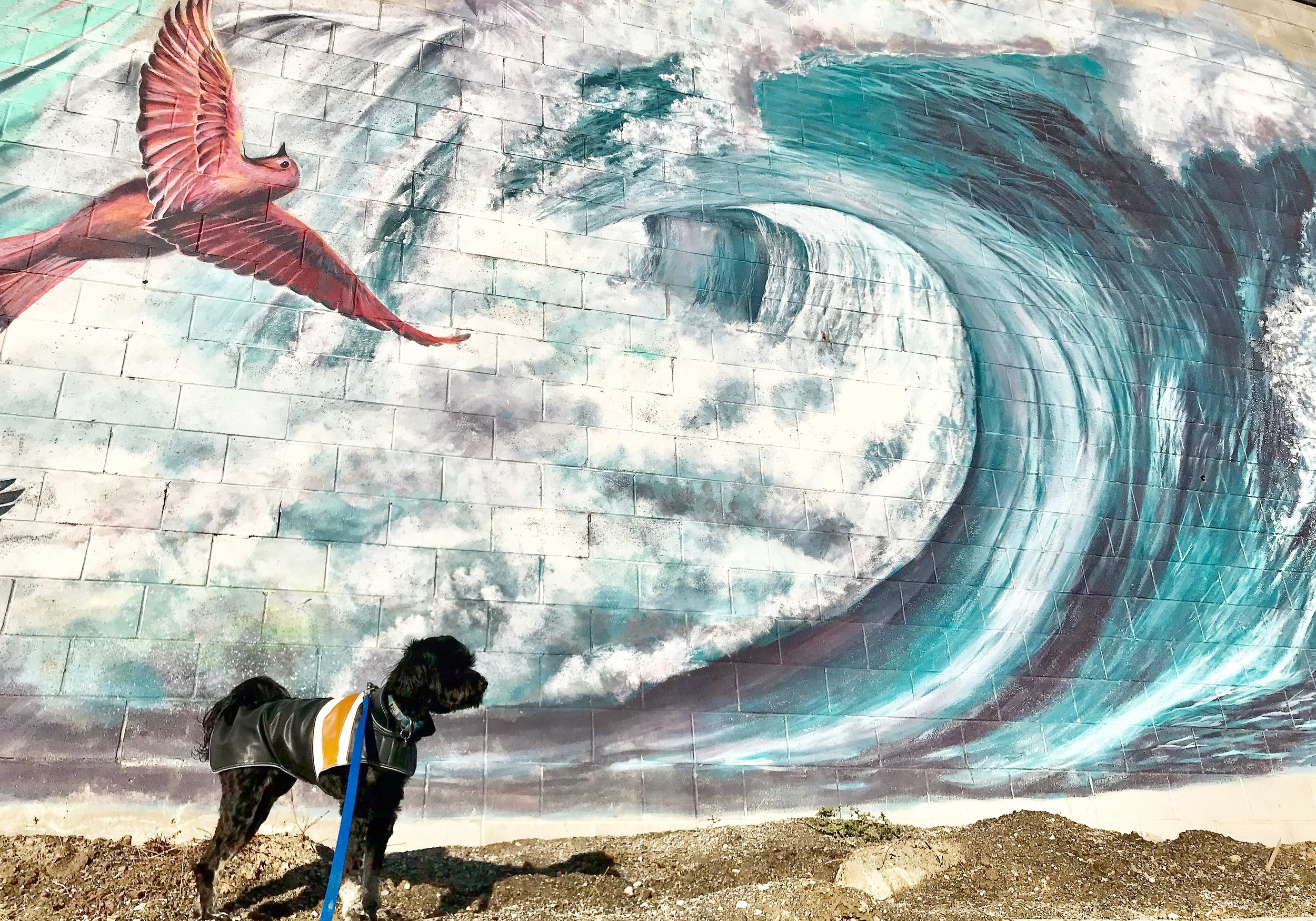
A storm of creativity. Such a large mural I put the dog in for scale.

They were huge. Inventive. Wonderful.

And no graffiti! What kind of strange world is this? I thought.

No graffiti or tagging on the murals in Williams Lake.

Public art has a special place in my heart. Many of my favourite travel photos are of the art I’ve found while exploring.

I loved this mechanical horse that happened by.

Spur of the moment

It was a week before news came that a route would be temporarily open. I’d never driven this particular road. But it was not helpful to find out it was the highway where people had recently died.

I was hesitant but it was time to try and get home. I loaded up my trusty co-pilot and headed out before dawn.

Light snow was falling. There were several roadblocks and delays. At one point we ended up waiting for half an hour beside a sign that said ‘avalanche area - no stopping.’ Sheesh! What a relief to start moving again.

Our journey was successful, but it was long and stressful.

The best part of any journey is arriving home safe and sound. The horrible storm had passed, but lives were lost, businesses were ruined, communities were destroyed, and many people were left homeless.

In spite of the circumstances, my memories of Williams Lake are wonderful. If you ever get a chance to visit, take a bit of time, look around, do the mural walk. It’s a special town that has a place in my heart forever.

I’ll be back. Thank you, Williams Lake!

Read More
john pozer john pozer

Doodle Ranch Diaries

When did this world get so busy? For me, it’s busier than ever. It seems that things just keep moving faster and it’s impossible to keep up. I don’t think it’s just me. I talk with lots of people who feel the same way.

Anxiety is in the air. FOMO is raging. Everyone’s racing just to get to the next red light. It’s a crazy time.

If you’re in the fast lane and you’re feeling kind of exhausted, you may want to pull over. Don’t beat yourself up. Good things can happen in the slow lane.
When did this world get so busy? For me, it’s busier than ever. It seems that things just keep moving faster and it’s impossible to keep up. I don’t think it’s just me. I talk with lots of people who feel the same way.

Anxiety is in the air. FOMO is raging. Everyone’s racing just to get to the next red light. It’s a crazy time.

If you’re in the fast lane and you’re feeling kind of exhausted, you may want to pull over. Don’t beat yourself up. Good things can happen in the slow lane.

I had a chance to take a break this summer. I needed to pull over. I wanted to unplug. It was time to do something decidedly different. But what?

Two weeks in Italy? I love Italy! Driving the Amalfi Coast? I love Positano! This sounded amazing! The thought of fine dining and fabulous food had me salivating on cue. What a perfect way to recharge.

But no, I would not be going to Italy. My neighbours were going. I offered to look after their dog. And, surprise bonus, their kid’s dog was part of the deal, too.

Counting our own, there were now three dogs in the house: our neighbour’s lovely 3-year-old mini-labradoodle, our 2-year-old mini-labradoodle, and the kid’s 1-year-old super-charged cavapoo (who I believe is possessed by demonic rapscallions.)

Determined to give our furry roomates the best of care, I asked the pet parents to give me some info to work with. In return, I got a lengthy, detailed spreadsheet on feeding times, sleeping preferences, favourite toys, playtime activities, pet tricks, and vocabulary. Yes, vocabulary. Too much, you think? Well, maybe not enough.

Before accepting the canine delivery, the property needed to be secure. The little one was an accredited escape artist. Kinda like my uncle Sydney Pozer who was an active strategist in the Great Escape - not the movie - the real deal. Despite best efforts, the little one still managed to leap a fence. Remember Steve McQueen's motorcycle chase scene? Kinda like that. But without the barbwire.

If you haven’t heard, dog sitting can be difficult. And it’s very time-consuming. Especially three dogs.

Yes, there’s more poop to bag, but dogs get sad when their humans leave. It takes time for them to emotionally adjust. They need lots of love and attention.

Luckily, these pups had met and played together before. And, most importantly, they were on familiar ground. They knew the turf of their internment. They’d enjoyed fun days on the lawn many times before. They just didn’t know how long they’d be visiting this time. Or how long their humans would be gone.

Whether happy or sad, eventually everyone gets hungry. Feeding time was tricky. New methods had to be employed. Kibble stuffed into food balls was the plan for breakfast. Formal bowls were used for dinner.

Feeding time required vigilant observation and patrol. Otherwise, the little one would have likely eaten everything. She’d hoover her bowl and head directly to another and bully her way in.

Food aggression is a concern when dogs are in a group, but these three pups got through 17 days with no problems. Dinner was served on the front lawn. Bowls were well-spaced. Behaviour was constantly monitored. Transgressions were quickly corrected.

Understandably, the first week was a bit bumpy. 2AM wakeups. 4AM. 6AM. Sleeping arrangements were adjusted. The older pups wanted to sleep on the king-size bed. Surprisingly, the little demon was happy to be locked up in her crate.

Nap times were interspersed throughout the day, and when the little troublemaker was down - everyone rested. We quickly fell into a pattern: up early for a bit of play, out to do their business, then followed by a long nap on the lazyboy before breakfast. These were my most cherished hours.

No one expects three playful dogs to perfectly behave. They were good for the most part, but there was some barking. And barking, if not quickly corrected, got a time-out. The little loudmouth got more than a few.

Time-outs were usually spent in the pink room where, ideally, the wall colour would subdue the agitated pup into a state of quietude. I’d seen this in a documentary on colour theory. A segment focused on prisons where pink rooms were used to tamp down violent behaviour.

It was worth a try.

However, the little demon just took her pause in the pink room as an opportunity to recharge her Beelzebub batteries. She’d return to the pack revitalized with new and even more devilish intentions.

Throw in a heat wave and you’ve got the perfect summer storm of malcontent. No one was happy for several days in a row.

I’m a shade-seeking animal. So are the pups. But when it’s 99 degrees in the shade, there’s no place to hide.

It was unbearable. But we managed our way through it by playing early, staying hydrated, and embracing extended siestas on the cool kitchen floor.

After a week and a half, I began counting the days to go. Then I started counting the sleeps. Then the hours. Then the poops.

Time was not flying at the Doodle ranch.

I was ready for it to be over. I dreamed of having just one dog to care for. One was enough.

I knew that I’d over-committed with my offer to dog sit two pups for two and a half weeks, but one has to develop their dog owner community. Plus, our neighbours had generously looked after our pup when we had to travel across the country for a family event. It was important to give back.

The return of the pet parents was a truly joyous occasion. The dogs went bonkers. It was beautiful. Those manic minutes of crazy love made the whole thing worth it.

Looking back, it was a once-in-a-lifetime experience… because I won’t be doing it again. No more three dog nights for me.

I love dogs and would take on an extra one in a heartbeat. Two dogs would be manageable, I think. But three? I’m not sure I would do it again.

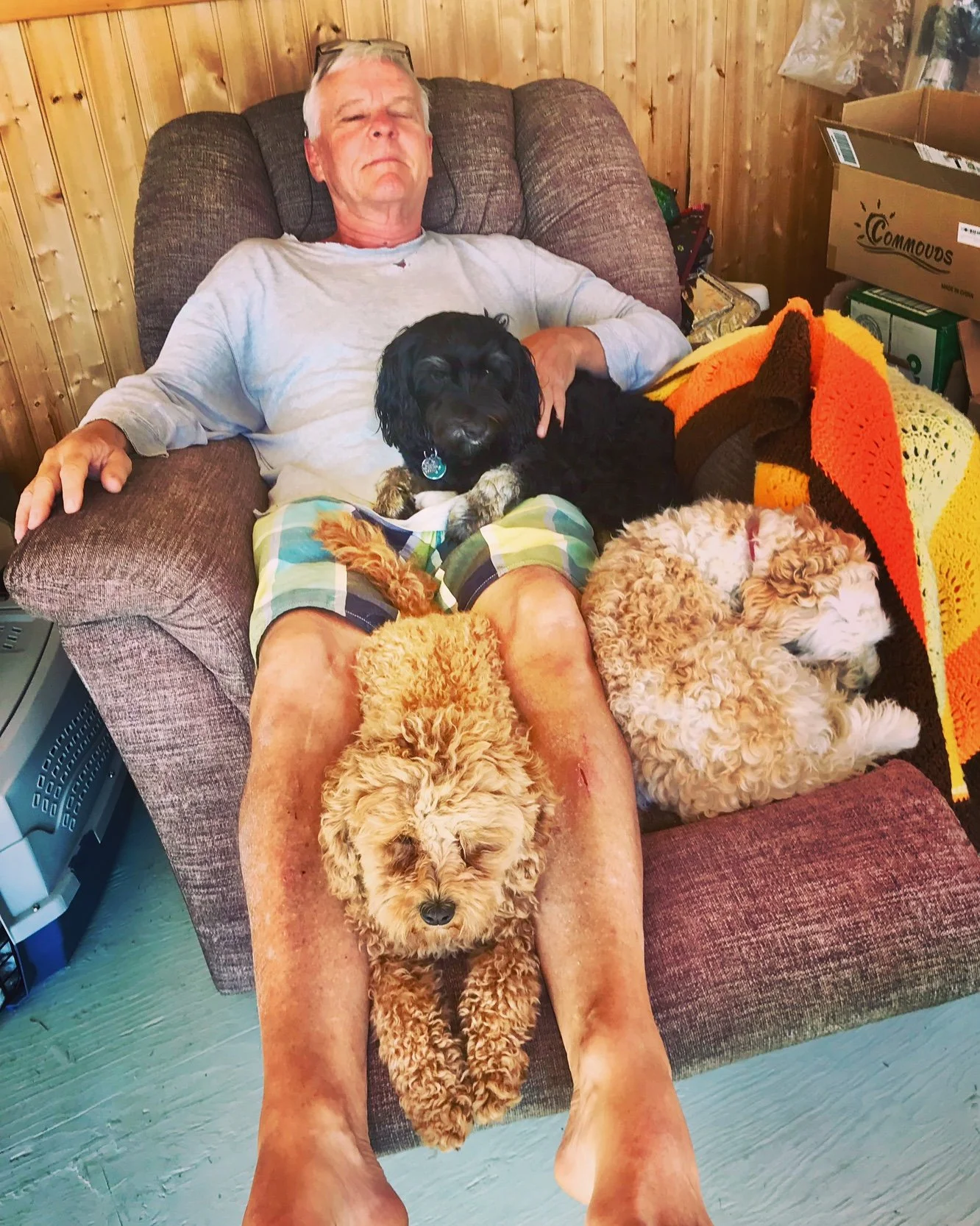
What do I miss? I miss the cuddles. I miss the dedicated playtime and the squeaky toys. I miss napping with all three sprawled across me like I’m one of the litter. I miss watching them wake my wife up with a thousand kisses in their morning ritual love alarm.

I may not return to my Doodle Ranch responsibilities, but I leave my post stronger and healthier. Managing three dogs took a lot of energy but somehow my batteries are recharged, my soul is enriched, and my head is clear.

I’m feeling lucky that no one ran away, and grateful that no one got hurt.

Well, we did get a few scratches here and there. Scratches of love. Doodle Ranch Memories.

Read More
john pozer john pozer

Student Filmmaking during Covid-19

Filmmaking during a global pandemic is not the time to be cutting corners or endangering yourself or others to ‘get the shot.’ Passions run high on film sets, but we must adjust to the times. The worst-case scenario of a misstep could be a serious illness or death.

Film schools have an obligation to provide a safe environment, in the classroom and onset. Student producers need to manage productions with the same responsibilities for health and safety as their professional industry counterparts, but it’s a challenge to effectively supervise student film shoots from an administrative perspective. So how can a school adapt and ensure that students are working safely?

Film production during the global pandemic has been re-invented for the health and safety of everyone in the filmmaking chain.

Major studios have rolled out strict set guidelines with comprehensive protocols adding to the bottom line for every budget. These new guidelines will likely be in place for most of 2021. So how does this impact student film production?

Netflix Let's Keep Rolling.jpg

While high tuition fees impact the overriding financial costs for the student filmmaker, the evolving Covid-19 guidelines put more items on the budget and likely more days to the schedule. And these additional costs, production complications, and safety requirements that are now in place need to be effectively navigated, regardless of the budget or academic outlines.

These times require strong leadership.

Filmmaking during a global pandemic is not the time to be cutting corners or endangering yourself or others to ‘get the shot.’ Passions run high on film sets, but we must adjust to the times. The worst-case scenario of a misstep could be a serious illness or death.

Film schools have an obligation to provide a safe environment, in the classroom and on set. Student producers need to manage productions with the same responsibilities for health and safety as their professional industry counterparts, but it’s a challenge to effectively supervise student film shoots from an administrative perspective. So how can a school adapt and ensure that students are working safely?

Even the most ambitious student filmmakers start at the micro-budget level. If you happen to be making your first films in the midst of this raging pandemic, it’s important to understand that the cost for making ANY film - safely - has increased.

If you’re producing a film right now, you’re likely sourcing deals on hand sanitizer, disposable PPE items, and individually wrapped craft service goodies. These are some of the new and necessary costs for filmmaking in 2021.

There’s also a new pace to consider for single-camera production. If you haven’t noticed, everything during a pandemic seems to take more time. There are more steps in the filmmaking process: more precautions to observe, more emails to send, more hurdles to get over. It’s always been a challenge to make a good film. And it’s always required strong problem-solving sensibilities.

The first major studio productions that returned after the industry-wide shutdown adapted and made the necessary adjustments: moving locations outside, writing actors out of scenes, planning visual effects in order to solve staging challenges. Leadership and management were thorough, creative, and comprehensive.

However, the industry model is next to impossible to apply at the student level because of the infrastructure required. Industry protocols include crewmembers successfully completing online safety and guideline quizzes, daily online health check-ins, temperature checks upon arrival at work, and a covid unit to enforce guidelines for cast and crew.

Size matters. Small, innovative filmmaking teams, be they indie or student, are easier to manage and keep safe than large, or even mid-size, industry crews. Adhering to the posted guidelines, pre-thinking the problems, and making it happen - safe and sure - with an abundance of caution is viable. It’s demanding, for sure, but there is no other way to do it except with the full respect for everyone involved.

IMG_0676.jpg

For student filmmakers, the simpler the better: two-actor scenes with good performances, great frames with memorable lighting, and a story that resonates with an audience. The fundamentals of good filmmaking haven’t changed, but the production process has.


Read More
john pozer john pozer

CONSTRUCTING A STORY

I enjoyed Constructing a Story by Yves Lavandier and have kept it on my desk over the last year while finishing my writing and teaching obligations. It has become a fixture, a valued reference ‘for all things writerly.’

This scholarly book is a mind-bending compendium — in an inspirational way — jam-packed with references and examples from a long list of studied works — a life-time of study, really — ranging from comic books to plays to feature films. The breadth of research and resource material alone is staggering.

Designed for writers of fiction in any medium.

Designed for writers of fiction in any medium.

I enjoyed Constructing a Story by Yves Lavandier and have kept it on my desk over the last year while finishing my writing and teaching obligations. It has become a fixture, a valued reference ‘for all things writerly.’

This scholarly book is a mind-bending compendium — in an inspirational way — jam-packed with references and examples from a long list of studied works — a life-time of study, really — ranging from comic books to plays to feature films. The breadth of research and resource material alone is staggering.

This book works for me as a motivational handbook, a positive distraction from my personal writing, and a tool to keep close while crafting a narrative. Mature writers and devoted cineastes will find value here. There are many gems and insights to be cherished. The whole section on ‘Fundamental Requirements’ is one that I have read many times over.

Contemporary creative writing and screenwriting courses - particularly at the graduate level - ask students to analyze stories written by classmates but gives them less-than-adequate instruction in how exactly to do that — aside from stating their personal preferences and cursory observations. Having a depth of comparative knowledge in history, film history, art history, and literature leads to greater distinctions, subtleties, and analytical clarity of a ‘story’ — and for me, specific details hold the true value of feedback that could be deemed useful. I often state that screenwriting is the most challenging form for the writer. Because it’s not prose, it’s not poetry — it’s not even what it’s supposed to be: a screenplay is intended to transform into a film. A shifting shape where words on paper turn into frames and images.

Yves Lavandier challenges academic oversights by offering an abundance of examples across a vast historical and multi-media context. The book requires a dedicated and disciplined reader who is not intimidated. A reader who strives to dig deeper into understanding the writer's craft, and one who is confident and bold enough to apply the knowledge gained into their own original narratives. Passionate students must engage with a wide-ranging index of titles to fully participate and go beyond the superficial coating of university screenwriting courses.

Of note, Lavandier was a student of producer and film professor Frank Daniel, whom I longed to learn from in a classroom setting but never did. However, I did receive bootleg tapes of his lectures and I’ve transcribed one of them here. (the first of a series of posts that detail his complete last lecture at Columbia)

Robert Redford and Frank Daniel. Looks like it’s a bit after “Butch Cassidy and Sundance Kid” days…

Robert Redford and Frank Daniel. Looks like it’s a bit after “Butch Cassidy and Sundance Kid” days…

Lavandier’s ideas, concepts and writing tips are insightful, however, familiarity with the films or source materials is important for comprehension. There were sections where I had no connection with the references which created a roadblock for me as a reader and I was not able to clearly understand the author's intention (it’s adapted from the original french version.) I appreciate his cautionary warnings: If you don't know the works in question, you might want to see or read them before reading further - and again: ...counting on your familiarity with the film to understand what I meant.

At the end of the day, Constructing a Story has a special place on the corner of my desk. I return to it in small bites, and usually find something new and helpful. I look forward to re-reading and re-watching some of my favourite stories and delving deeper into the structure, deeper into the architecture of story.

***


Read More
john pozer john pozer

SCRIPT to SCREEN to PRODUCTION - BABY DRIVER

‘Script to Screen’ class presentations are an opportunity for students to take on the role of ‘teacher.’ And it gives me a chance to learn from them, to keep me current. Students can choose a particular scene from any film - and BABY DRIVER did not disappoint. Lots of great insight into character, relationships, shot selection, pacing, colour palette, and production design.
L to R: Jon Bernthal, Eiza González, Ansel Elgort, and Jon Hamm have just robbed a bank.

L to R: Jon Bernthal, Eiza González, Ansel Elgort, and Jon Hamm have just robbed a bank.

‘Script to Screen’ class presentations are an opportunity for students to take on the role of ‘teacher.’ And it gives me a chance to learn from them, to keep me current. Students can choose a particular scene from any film - and BABY DRIVER did not disappoint. Lots of great insight into character, relationships, shot selection, pacing, colour palette, and production design.

BABY DRIVER is exciting. And the chase scenes are spectacular. True technical achievements in the action genre. I hadn’t seen the film for over a year, so revisiting the opening was a treat. Honestly, when it first came out I didn’t know what to expect from the title, but I found the film thoroughly enjoyable. The lead is played by Ansel Elgort, who creates a believable and totally unique character who is born to drive.

The director, Edgar Wright, kickstarts his show with the throttle wide open. He crafts a music-driven bank robbery with the obligatory getaway chase - and what a chase it is! Watch it here.

The scene runs a bit over five minutes and his script covers four pages. Fairly accurate, given the thumbnail guesstimate of one page of script timing out to be one minute of film. Here’s the script link.


BABY D script page.jpg

Edgar Wright wastes no words nor space on the page. Likewise with his visuals. His rendering is impressive, yet he makes it look easy. So easy, in fact, that I took a poll of the class asking, “how many days of production did it take to get all the shots for this chase?”

While the class mulled over the question and watched the scene again, I texted the amazing Assistant Director, Walter Gasparovic, to confirm the ‘script to screen to production’ dynamics. Fortunately for me, he responded within minutes - and when I read his scheduling info, I knew it was going to shock the class into a new understanding of production mechanics.

Walter Gasparovic #truth

Walter Gasparovic #truth

My students thought the scene probably took two to four days. That’s because good directors and production teams make it look SO EASY! So, we talked about location changes, helicopter shots, re-setting blocks of streets with background cars and extras. I could see the wheels turning as they re-considered. This wasn’t a production class, but it gave me a clearer idea of what is missing in post-secondary film education.

Here is Walter’s text. Let it be a lesson to film students and filmmakers everywhere:

Walter text crop.jpg

Thank you, Walter! We’ll be looking for you on BABY DRIVER 2.

Read More
john pozer john pozer

The Arabian New Wave

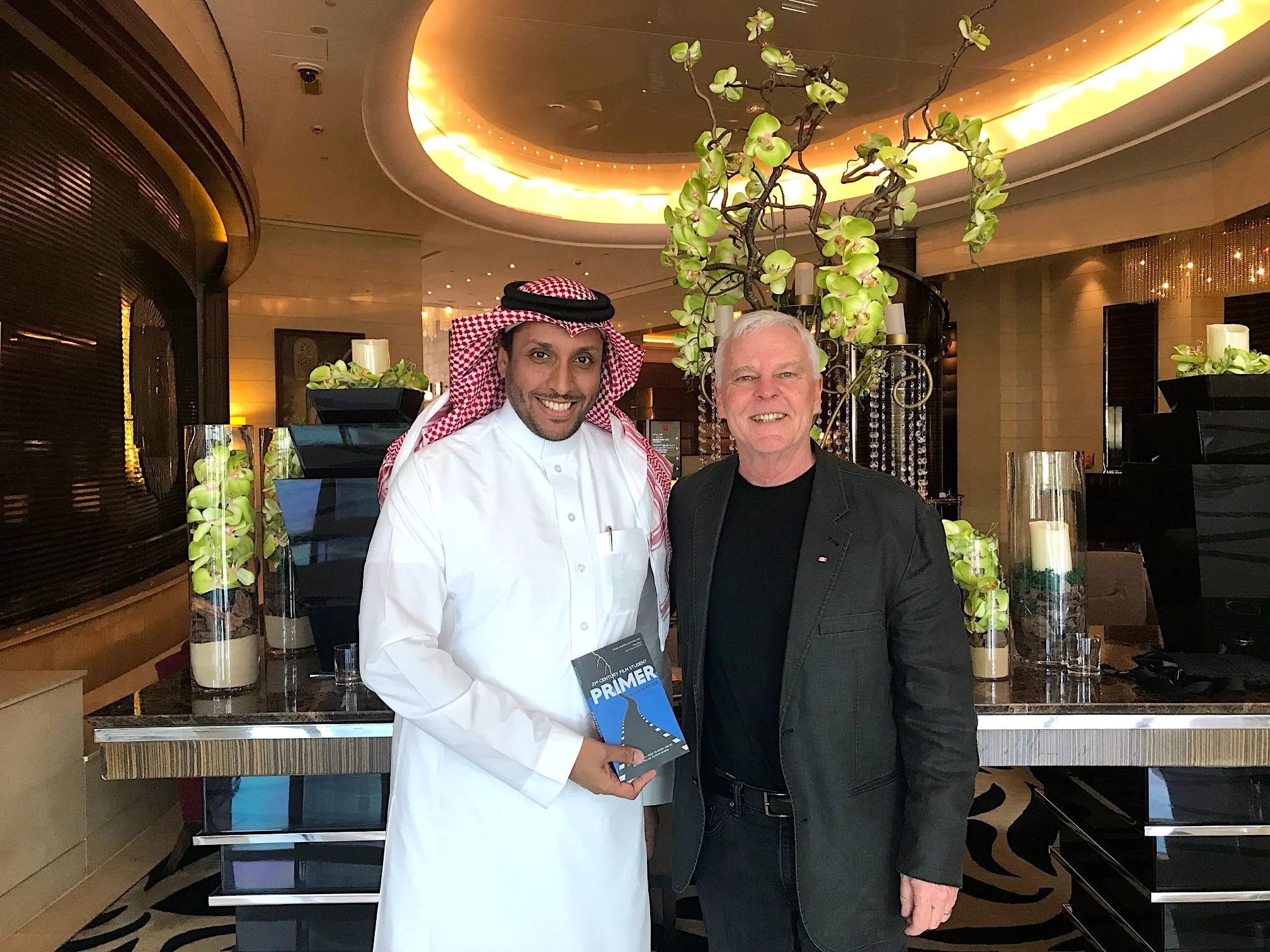
One of the greatest thrills for me as a teacher is to follow up with former students — and I love it when they’re making waves. Change-makers are busy, so I was grateful for the opportunity to sit down with Mohammed Obaidullah earlier this year to talk about cinema & film education in Saudi Arabia.

Mo studied with me at VFS and went on to work in the film industry in Canada. As a personal side project, he produced a popular online film education series in Arabic that garnered thousands of subscribers. He has since moved back to the capital city of Riyadh where he’s now the Director of Compliance and Control for Cinema and Audiovisual Media in the Kingdom of Saudi Arabia — and he’s playing a key role in the resurgence of their national cinema industry.

One of the greatest thrills for me as a teacher is to follow up with former students — and I love it when they’re making waves. Change-makers are busy, so I was grateful for the opportunity to sit down with Mohammed Obaidullah earlier this year to talk about cinema & film education in Saudi Arabia.

Mo studied with me at VFS and went on to work in the film industry in Canada. As a personal side project, he produced a popular online film education series in Arabic that garnered thousands of subscribers. He has since moved back to the capital city of Riyadh where he’s now the Director of Compliance and Control for Cinema and Audiovisual Media in the Kingdom of Saudi Arabia — and he’s playing a key role in the resurgence of their national cinema industry.

MoObaidullahedit.JPG

What’s happening in Saudi Arabia is more than a big deal in the world of film — it’s a cinematic movement. With a 35 billion dollar injection for the first phase of construction of hundreds of new theatres, Saudi Arabia is now poised to do what Hollywood has done so well — build an audience.

There have been pivotal times in the world of cinema that forever changed the global cultural fabric of film — and we are at the beginning of one these historic moments. The Saudi national cinema scene was small before it was stifled by authorities in the 1980’s. But now, with the recent lifting of the long-standing cinema ban, the new wave happening in the Arabian peninsula feels more like the first swells of a tsunami: a #SaudiCineTsunami.

Black Panther screening breaks Saudi’s 35-year cinema ban with men and women seated together - ABC News

Black Panther screening breaks Saudi’s 35-year cinema ban with men and women seated together - ABC News

The first part of the Saudi film plan is to build theatres, thousands of them, and then expand their creative industries with Saudi talent, new facilities, and schools. I’m hopeful that my new book will energize these young filmmakers who can now light up the screens in a country where cinemas have been dark for decades.

A March 2019 Variety article lays out some of the initiatives, including the first Saudi Arabia International Film Festival slated for 2020 and Vox Cinemas plan to open more than 100 screens this year. In keeping with the grandeur of the Kingdom, state-of-the-art multiplexes will offer gourmet dining amenities in feature locations, including Riyadh’s majestic Kingdom Center. Take a look at their impressive promo video.

Kingdom Center and Tower, Riyadh, Saudi Arabia — now with Imax theatres.

Kingdom Center and Tower, Riyadh, Saudi Arabia — now with Imax theatres.

Mohammed Obaidullah at the ribbon cutting ceremony, Kingdom Center, Riyadh, Saudi Arabia

Mohammed Obaidullah at the ribbon cutting ceremony, Kingdom Center, Riyadh, Saudi Arabia

Developments in film education are also exciting. Like the women-only cinematic arts program which is pushing the boundaries for female filmmakers, bringing new eyes — and stories — to the screens of Saudi cinemas and beyond. It’s the first time that I’ve heard of an all-female film program, and I hope this ground-breaking idea catches on.

Leading film schools — such as La Femis and USC — have helped Saudi film talent with workshops and training courses, putting a focus on storytelling skills as well as technical disciplines. The door is now open for a new generation of 21st century filmmakers to make a difference. The world is watching!

Selfie with Mohammed Obaidullah

Selfie with Mohammed Obaidullah

The comprehensive plan for the overall future of Saudi Arabia, known as Vision 2030, depends on the creative ambitions and entrepreneurial spirit of the younger generation, and everything is in place for the film industry and cinema education programs to thrive in a sustainable socioeconomic structure. This is a long-term blueprint designed to breathe new life into a national cinema that has been dormant for too long.

Truly an exciting time, and a highlight in the world of film and art. Not just for Saudi Arabia and the Middle East, but for the entire world.


Read More
PRESS john pozer PRESS john pozer

**PRESS RELEASE**

New book by John Pozer reframes film education for the next generation. Filled with tips and tricks, PRIMER lays out a practical approach for creative success and scholastic achievement in an easy-to-read format.

FOR IMMEDIATE RELEASE


NEW BOOK BY JOHN POZER

REFRAMES FILM EDUCATION FOR THE NEXT GENERATION

 21st CENTURY FILM STUDENT PRIMER

Everything You Need to Know and Do Before You go to Film School 

VANCOUVER, February 19, 2019 – 21st CENTURY FILM STUDENT PRIMER: Everything You Need to Know and Do Before You go to Film School, the straight-forward new book by award-winning filmmaker and educator John Pozer, reframes film education for the next generation of filmmakers. PRIMER lays out a practical approach for creative success and scholastic achievement in an easy-to-read format.  

Based on years of research and interviews with educators and former students, PRIMER relates challenges faced by Pozer’s many students and offers a slate of easy-to-follow exercises to help navigate them, including valuable strategies on how to choose the right school, create a strong portfolio, and arrive with clear ideas on how to maximize the opportunities of any film program.

Pozer has taught scores of emerging filmmakers at leading film schools and launched his own career by shooting his debut feature while a university student. That film, The Grocer’s Wife, was showcased by both the Cannes and Toronto festivals and won a slate of international awards. 

Pozer says, “I wanted to write a no-nonsense guide that is educational, entertaining and, most of all, useful. Pursuing a post-secondary film education requires a major investment of time and money. I think it’s imperative for students to know what they’re getting into and be as prepared as possible. Film school is like filmmaking: the more prepared you are, the better your chances of having a successful and rewarding experience. No matter which program one plans to attend or what kind of films one wants to make, readers will find comprehensive exercises and techniques on how to develop their voice, accomplish their best work, and make the most out of their creative efforts.”

21st CENTURY FILM STUDENT PRIMER: Everything You Need to Know and Do Before You go to Film School is now available in paperback and ebook and can be ordered on-line through all major book retailers.


ABOUT JOHN POZER

John Pozer is a Vancouver-based filmmaker, author and educator. He wrote, directed, edited and produced The Grocer’s Wife, which was selected to the Cannes Film Festival as Opening Film for the International Critic’s Week in 1992.  The film garnered numerous accolades including the prestigious Prix Georges Sadoul (French Critic’s Award) and Pozer won the inaugural Claude Jutra Award from the Academy of Canadian Cinema and Television for Best Direction of a First Feature Film. 

Pozer returned to Cannes as an executive producer and editor with the independent feature Kissed.  He also executive produced After Eden, which premiered in the New Directors section at the San Sebastian Festival. Pozer has also directed a slate of network television, including drama, comedy, animation and documentary.

Pozer’s career began at a young age as an actor. He went on to study film and graduated with a Master of Fine Arts degree from Concordia University in Montreal. Over the years, he has taught film as a senior directing instructor at Vancouver Film School and adjunct professor at Simon Fraser University, The Art Institute, LaSalle College, British Columbia Institute of Technology, and the University of British Columbia.

            21st CENTURY FILM STUDENT PRIMER: Everything You Need to Know and Do Before You go to Film School is his first book.

#

Matt+Shaw+Primer.jpg

Read More